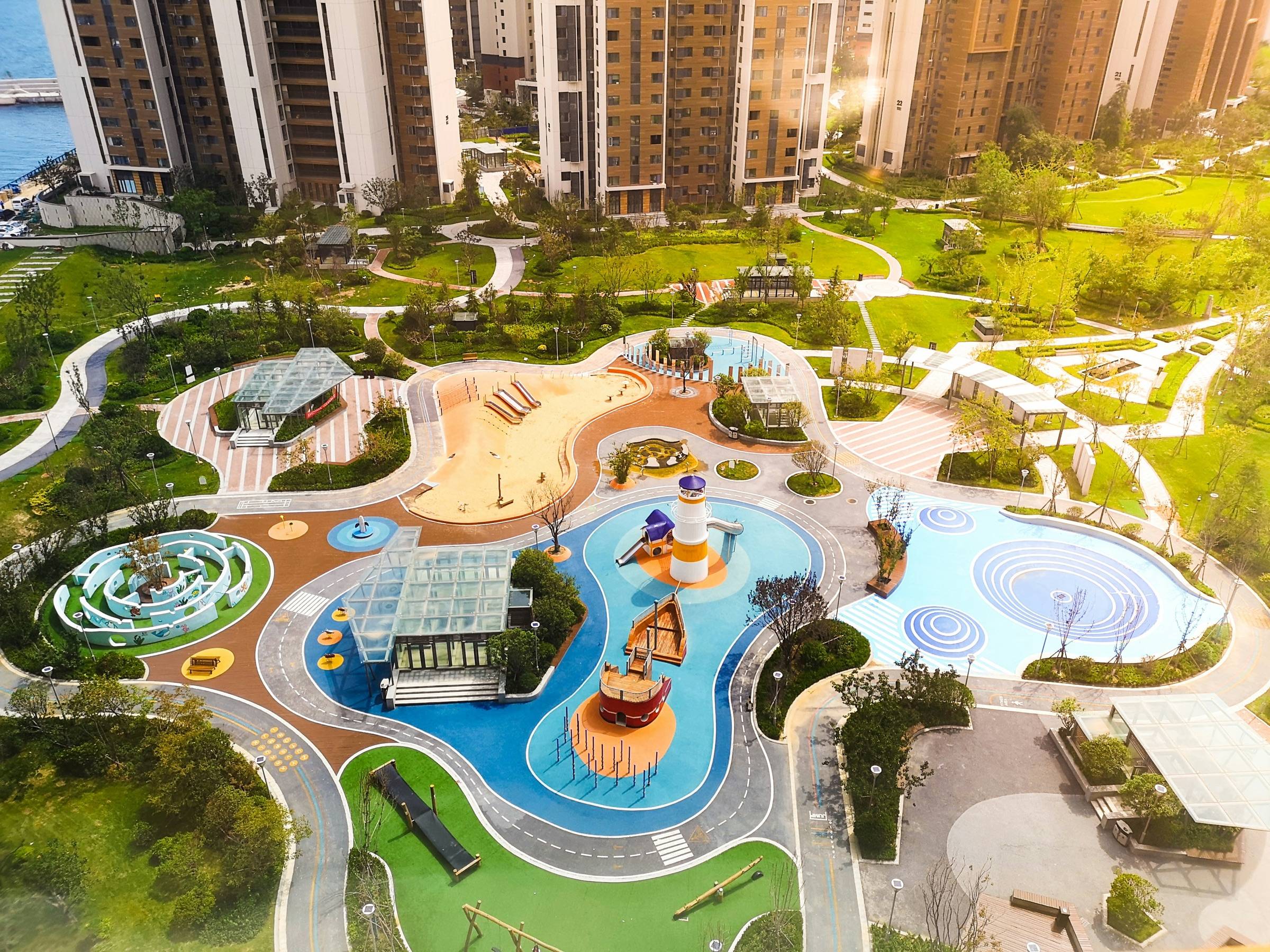
The short answer
The trades involved
- Equipment installer. Assembles the structures, sets footings and follows the manufacturer’s instructions. Often arranged through the dealer.
- Site and concrete contractor. Grading, drainage, demolition of old equipment, and concrete flatwork for paths, seating pads and borders.
- Surfacing installer. Poured-in-place rubber needs a specialist crew and the right weather; tile, turf and loose fill have their own installers.
- Landscaper. Lawn, planting beds and trees around the play areas.
- Inspector. A qualified inspector checks the finished playground before it opens.
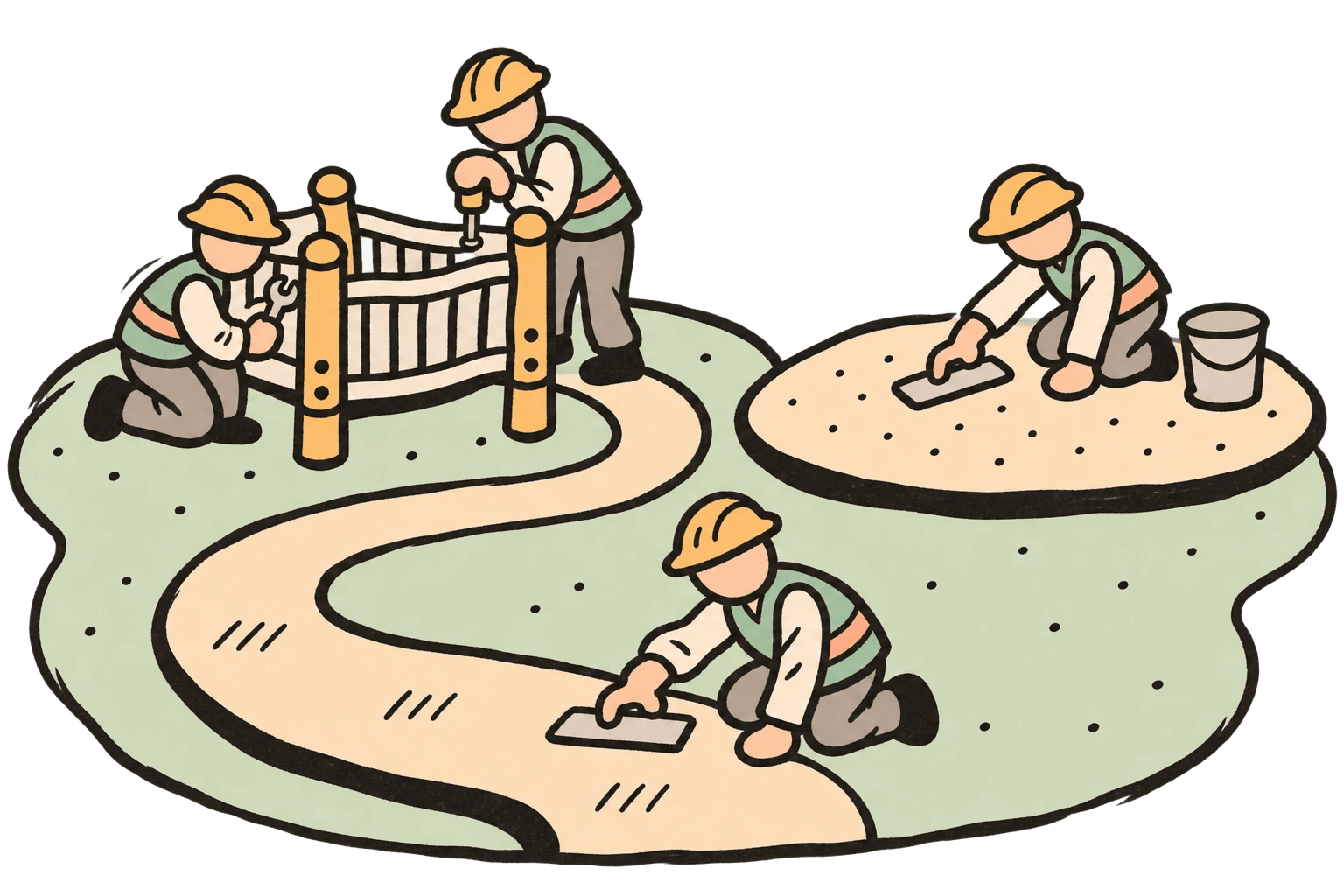
What changes labor cost
- Access. Tight sites, long carries and crane lifts slow every trade.
- Ground conditions. Slopes, poor soil, buried utilities and drainage problems add site work.
- Sequencing. Equipment goes in before most surfacing, and concrete has to cure, so trades that wait on each other add time.
- Season and region. Local labor rates and weather windows, especially for poured rubber.
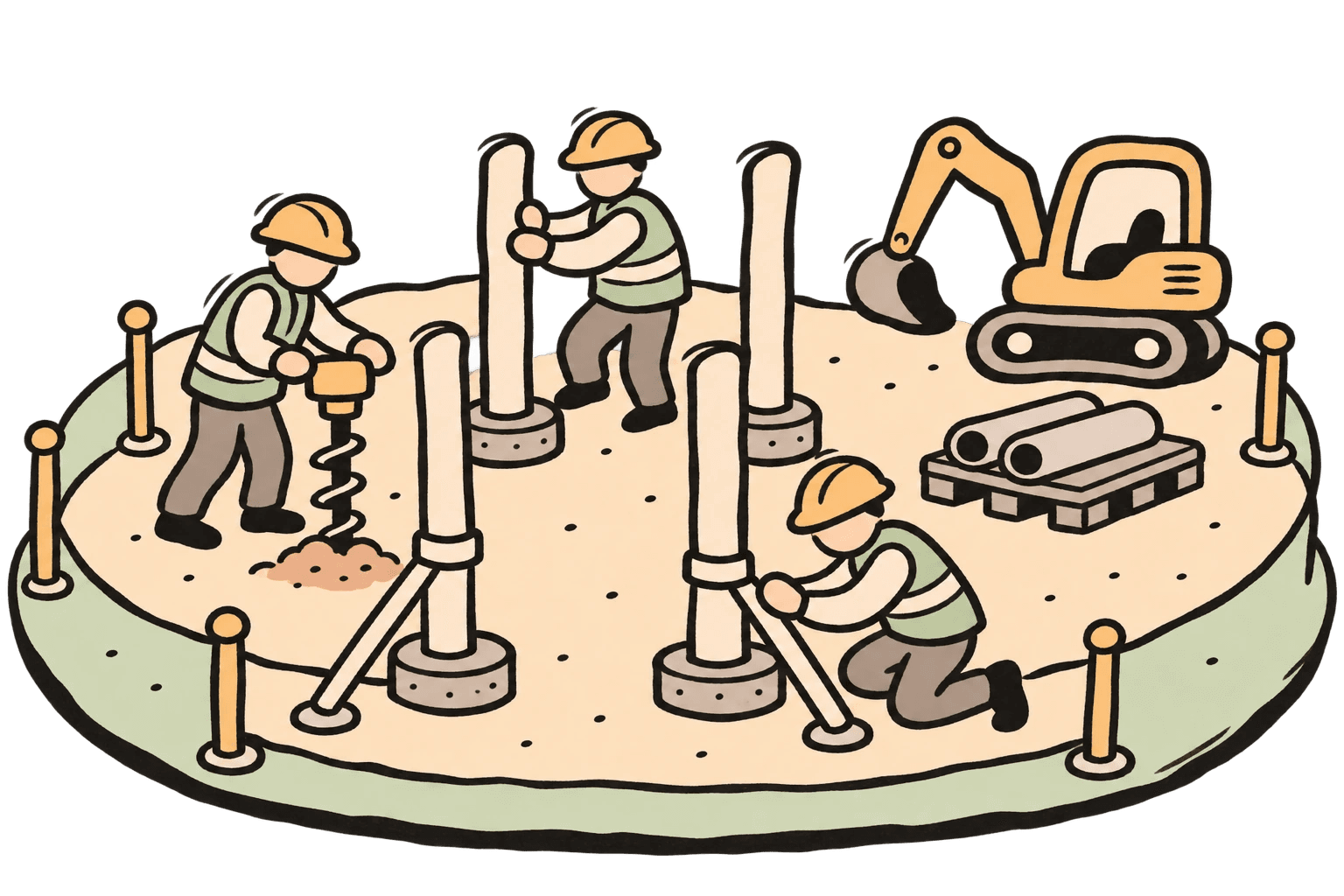
What an installation quote covers, and what it can leave out
“Installation” can mean anything from assembling the equipment on a ready site to managing every trade. Before comparing prices, ask each installer the same questions so the quotes describe the same work.
| Part of the job | Ask |
|---|---|
| Receiving the delivery | Who signs for the freight, unloads it with what equipment, checks for damage and stores it until the crew arrives? |
| Assembly | Is every piece in the order assembled, including freestanding swings, signs and benches, or only the main structure? |
| Footings and concrete | Are holes, concrete and removal of excavated soil included? What happens if the crew hits rock or a buried utility? |
| Utility locates | Who calls for underground utility marking before digging? |
| Site work | Is any demolition, grading or drainage included, or is the site assumed ready and level? |
| Surfacing | Is surfacing installed by the same crew, a subcontractor or by you? Who installs the base and borders, and in what order? |
| Cleanup | Are packaging, debris and spoils hauled away, and is damaged turf or irrigation repaired? |
| Inspection and handover | Is a post-installation inspection included? Will you receive manuals, product registrations and warranty paperwork? |
| Exclusions | What does the quote say is not included? Ask for that list in writing. |
For the whole project, including equipment, surfacing and site work, use the quote-comparison table in the cost guide.
Community builds
Some manufacturers allow volunteer builds under a qualified supervisor. The 3D designer prices supervision, tools and footing work at about 10%–20% of equipment, and only where the manufacturer approves it. Surfacing, concrete and site work usually still need professionals.
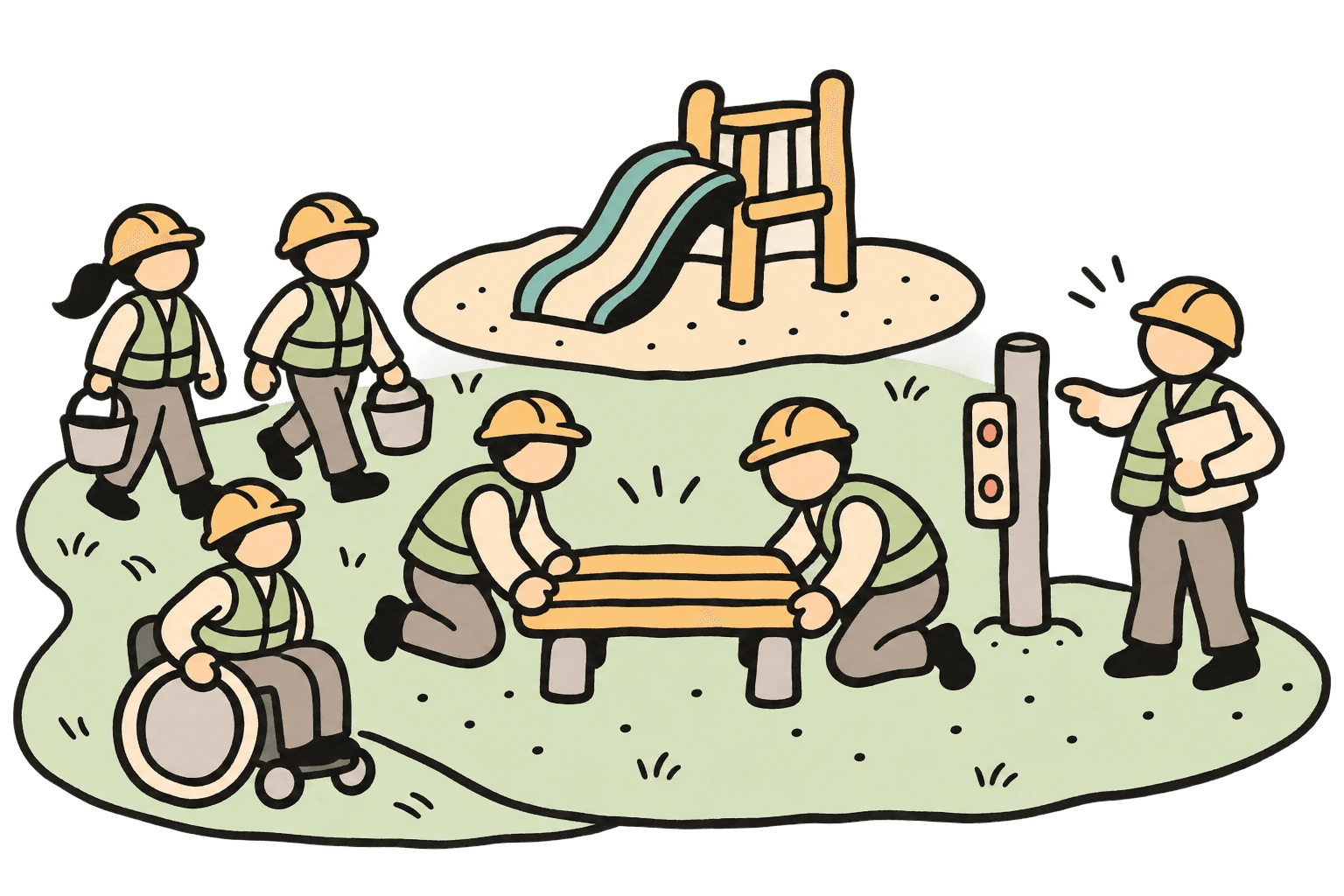
Who to hire
Ask installers for manufacturer certification for the products, proof of insurance, references for similar commercial projects, and a written scope that says what is and is not included. Make sure one party is responsible for coordinating the trades and for the final inspection. See equipment cost and surfacing cost for the other major lines.