The types
Composite-structure playgrounds
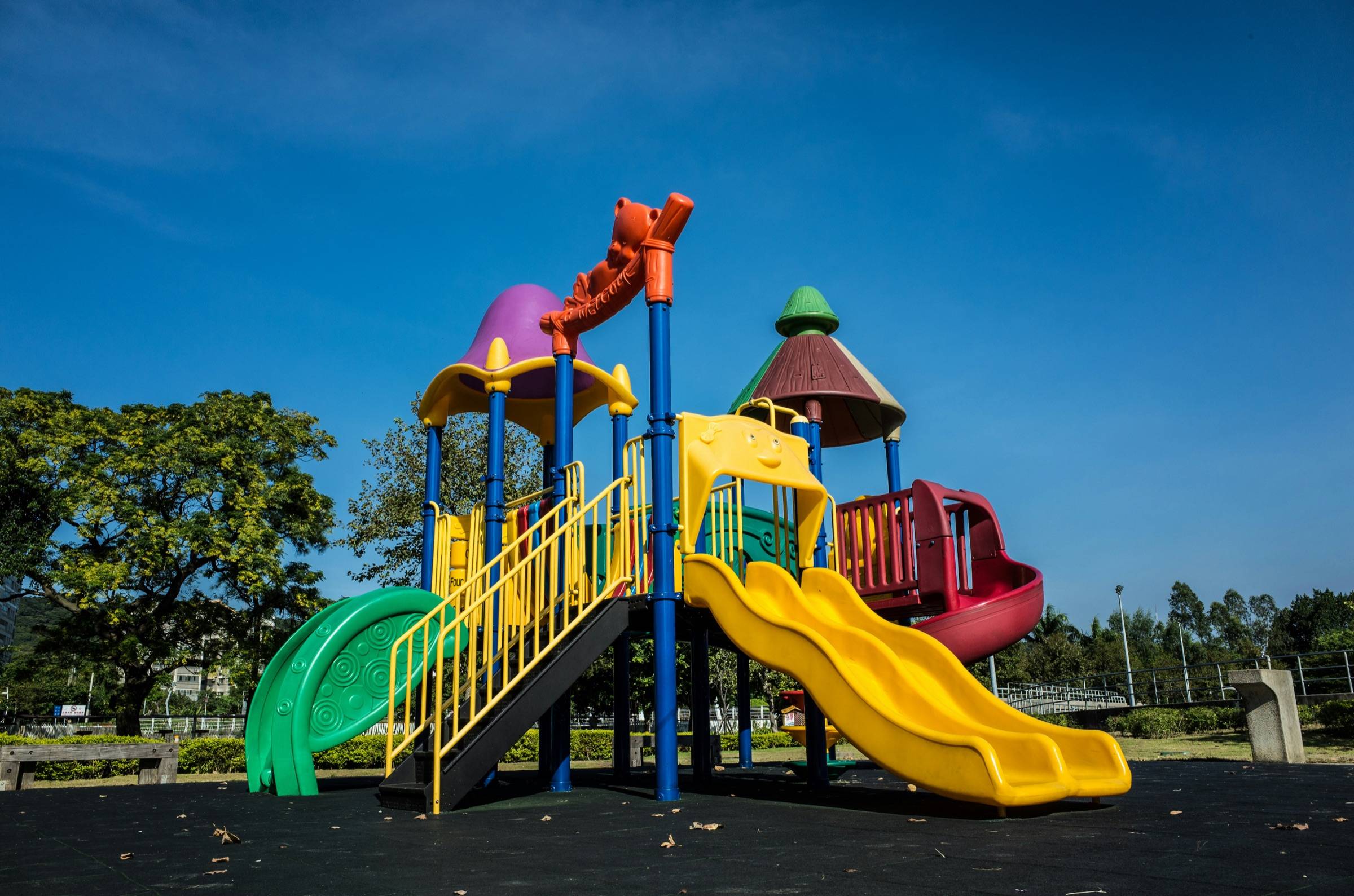
A main structure of connected decks, slides, climbers, and activity panels. Efficient for capacity per square foot and the most common format for schools and parks.
Freestanding-play collections
Individual climbers, spinners, swings, and balance elements spread across the site. Flexible on irregular sites and easy to phase, but each piece needs its own use zone.
Nature-inspired play
Logs, boulders, landform, and plantings integrated with play. Can be lower in manufactured equipment cost but higher in site work and landscape maintenance.
Inclusive playgrounds
Designed so children and caregivers of different abilities can play together, with firm surfaces, wide circulation, and varied ground-level and elevated play.
Themed playgrounds
Custom forms and graphics tied to a place or story. Custom fabrication raises equipment cost and lead time.
Early-childhood playgrounds
Ages 2–5 (and specialized under-two areas) with lower platforms, imaginative and sensory play, and secure boundaries.
School playgrounds
Sized for recess peaks, durable under heavy use, with open supervision sightlines and often separate age zones.
Neighborhood and HOA playgrounds
Moderate capacity, mixed ages, often unsupervised, with seating for caregivers and attention to inspection and insurance.
Destination playgrounds
Large regional draws with high capacity, distinctive design, extensive shade, and amenities such as restrooms and parking.
Phased playgrounds
Built in stages as funds allow. Plan the full layout, utilities, and surfacing base first so later phases fit.
Mixed-age zones
Distinct areas for different ages on one site, sharing circulation, shade, and seating.
Multigenerational play environments
Play, fitness, and seating for children, caregivers, and older adults side by side.
Comparison
| Type | Typical setting | Age group | Capacity | Site area | Surfacing implications | Cost tendency | Planning complexity |
|---|---|---|---|---|---|---|---|
| Composite structure | Schools, parks, churches | 2–5 or 5–12 | Medium–high | Compact for capacity | Use zone around the whole structure | Moderate | Low–moderate |
| Freestanding collection | Small sites, phased projects | Any | Low–medium | Spread out | Separate zones per piece | Low–moderate | Low |
| Nature-inspired | Parks, camps, schools | Mixed | Medium | Larger | Loose fill common; routes need care | Varies; more site work | Moderate |
| Inclusive | Parks, schools, nonprofits | Mixed | Medium–high | Larger for circulation | Unitary surfacing common | Higher | Moderate–high |
| Themed | Parks, hospitality | Mixed | Medium–high | Varies | Often unitary | Higher | High |
| Early childhood | Child care, preschools | 2–5, under 2 | Low–medium | Small | Unitary often preferred | Moderate | Moderate |
| School | Schools | 5–12 and 2–5 | High | Medium–large | High-traffic wear | Moderate–high | Moderate |
| Neighborhood / HOA | HOAs, multifamily | 2–12 | Low–medium | Small–medium | Varies | Low–moderate | Low–moderate |
| Destination | Regional parks | All | Very high | Very large | Extensive unitary | Highest | High |
Tendencies relative to other commercial playgrounds, not price ranges. Use the planner for a project-specific range.
Choosing a type
Start from who will use the playground and how many at once, then the site. A small, irregular yard may favor freestanding pieces; a school with big recess peaks may need a composite structure plus swings; a community with strong advocacy may aim for an inclusive destination. Theplanning guide walks through the decisions in order, and thecommercial vs. residential guide explains why backyard equipment is not a substitute.
Disclosure. Design My Playground is an independent planning resource, not a manufacturer, contractor, engineer, inspector, or certification body. Planning estimates are not bids, quotes, construction documents, or compliance determinations; qualified professionals and the selected manufacturer must confirm final products, layout, safety, accessibility, and pricing.