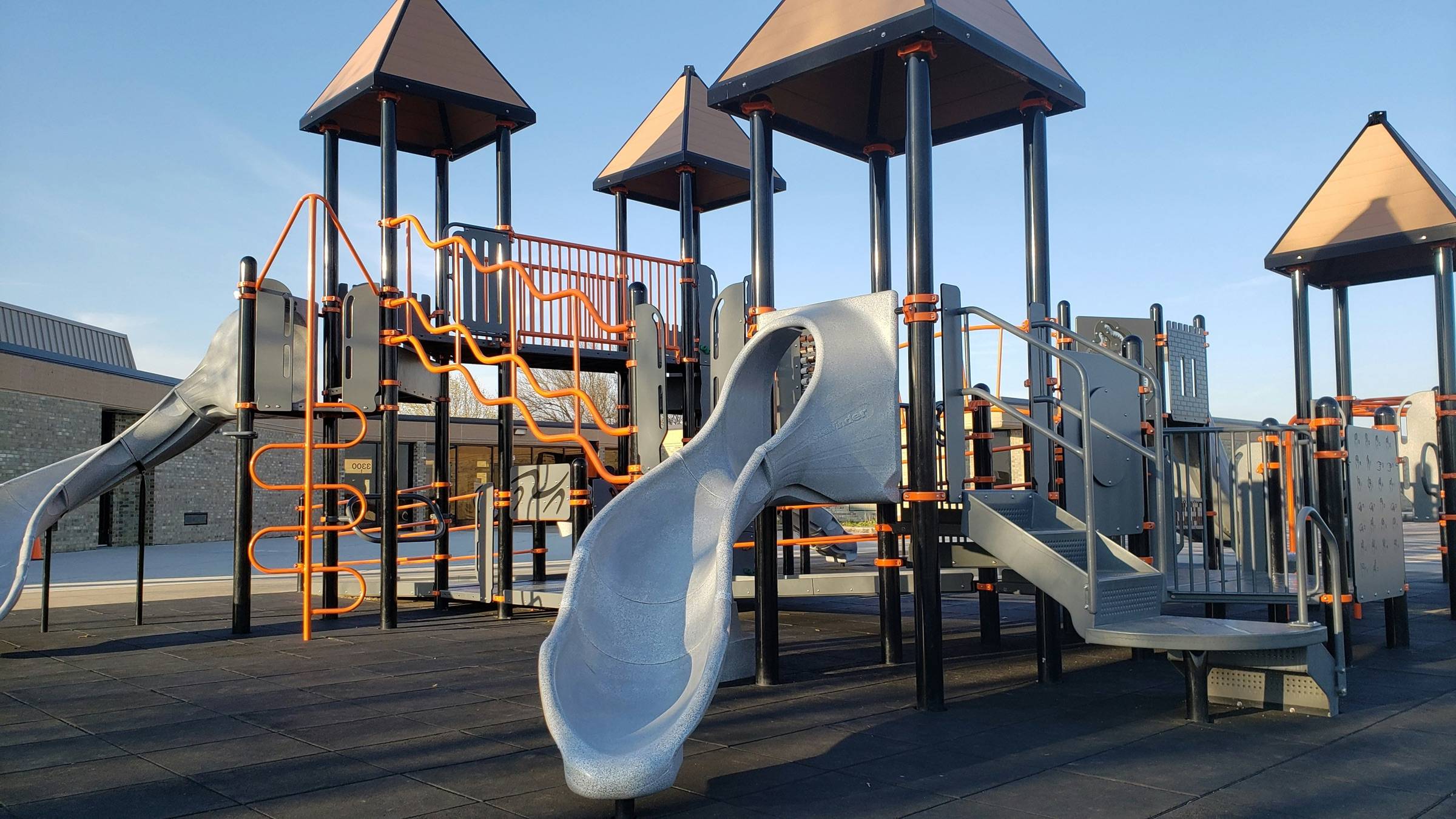
The short answer
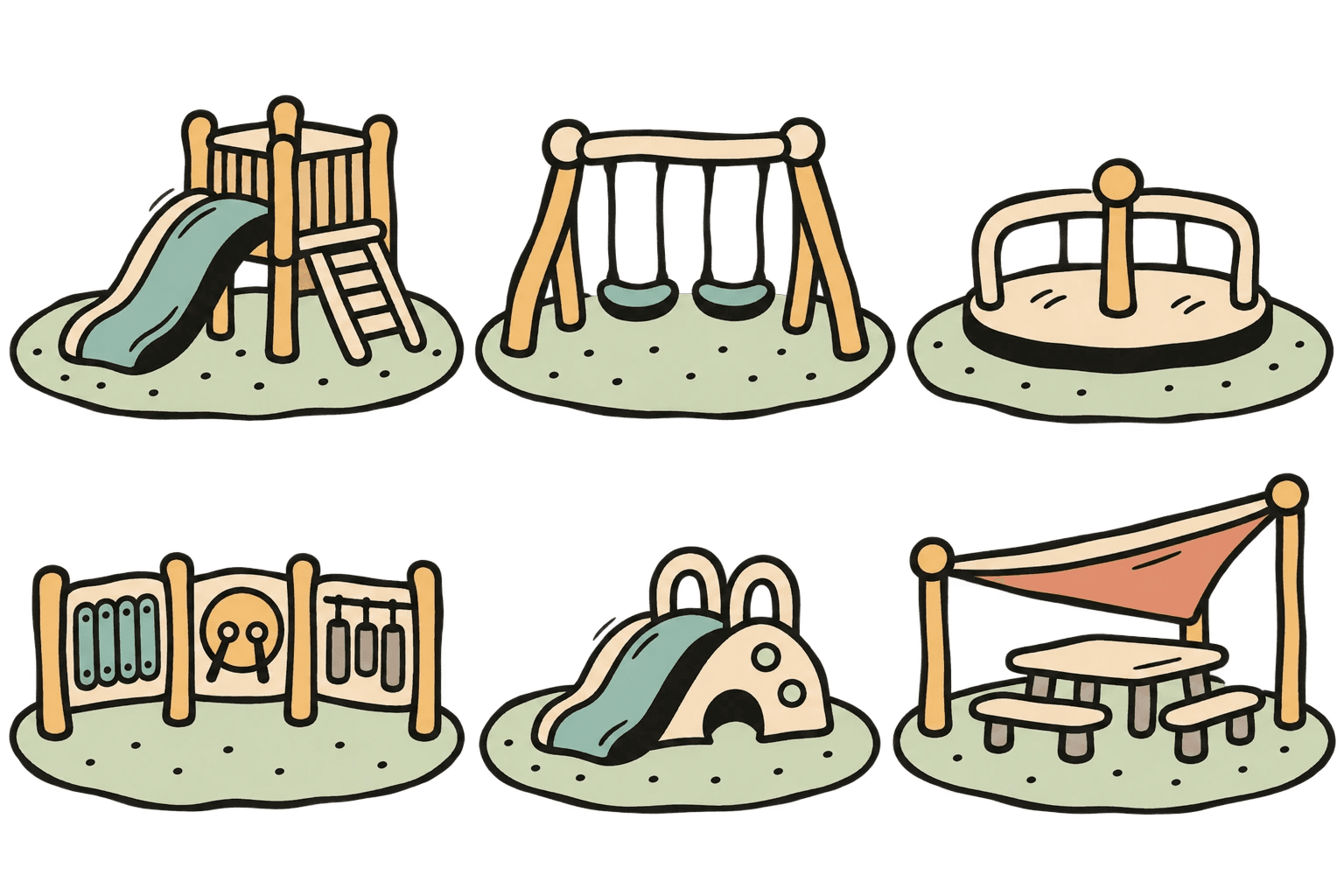
Equipment by play zone
The 3D designer prices equipment from the play zones you choose. These are standard-size planning ranges; a small zone is about 0.6× and a large zone about 1.6× its equipment and area.
| Play zone | Typical equipment | Equipment, standard size |
|---|---|---|
| Main play structure | Towers, decks, slides and climbers. | $55,000 ($30,000–$80,000) |
| Preschool area | A small structure and slide for ages 2–5. | $24,000 ($12,000–$35,000) |
| Climbing & challenge | Nets, balance routes and overhead play. | $23,000 ($10,000–$35,000) |
| Inclusive play | Ground-level play everyone can reach. | $17,000 ($8,000–$25,000) |
| Swings | Belt, bucket and accessible seats. | $11,000 ($6,000–$15,000) |
| Fitness area | Stations for teens and adults nearby. | $13,000 ($6,000–$20,000) |
| Toddler discovery | Low, gentle play for children under 2. | $10,000 ($5,000–$15,000) |
| Imaginative play | Playhouses and role play. | $12,000 ($5,000–$18,000) |
| Nature play | Logs, boulders and planting. | $9,500 ($4,000–$15,000) |
| Spinning & motion | Spinners and rockers. | $8,000 ($4,000–$12,000) |
| Sensory & music | Textures, sounds and instruments. | $8,000 ($4,000–$12,000) |
| Quiet retreat | Calm, semi-enclosed spaces. | $5,000 ($2,000–$8,000) |
Freight, installation and surfacing are priced separately.
What changes the price
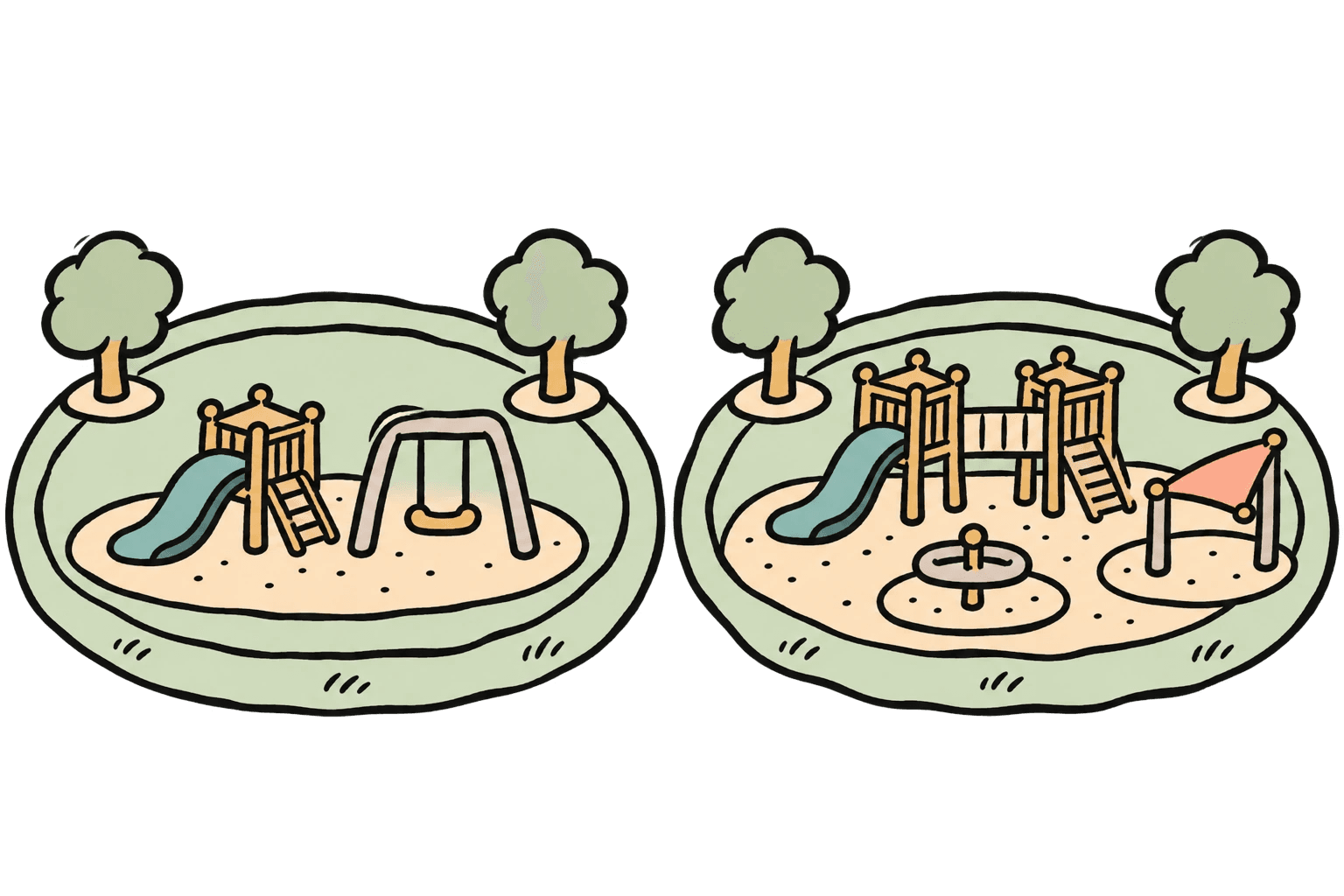
- Size and height. More towers, decks and slides, and taller decks, add components and structure.
- Number of play experiences. Swings, spinners and freestanding pieces each need their own equipment and space.
- Inclusive and accessible components. Ramps, transfer stations and ground-level play extend the budget, and the access around them is part of the project.
- Materials and theming. Natural timber, custom themes and premium finishes cost more than standard components.
- Age groups. Separate areas for ages 2–5 and 5–12 usually mean two sets of equipment.
Equipment is not the whole project
Freight is commonly 5–15% of the equipment price, and installation, surfacing, site work and fees come on top. Published budget splits put equipment at roughly 40%–60% of a project. Complete projects that include site work, accessibility, shade and contingency, like the worked examples on this site, often land nearer 10%–35%. The 3D designer builds the full range from your site and choices. See installation and labor and surfacing for the other major cost centers.
Buying equipment
Commercial equipment is sold through manufacturers and their local dealers, often with layout and installation offered together. Public owners may buy through cooperative purchasing contracts or a formal bid. Ask every supplier for the same scope (equipment, freight, installation, surfacing and site work) so proposals can be compared fairly, and confirm the products are certified to the current safety standards.